
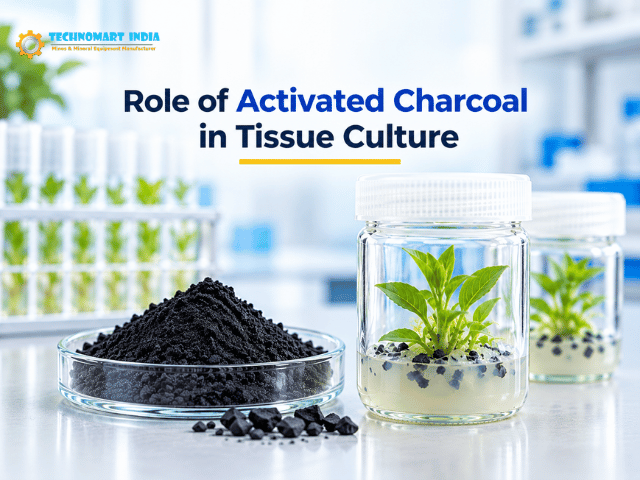
Role of Activated Charcoal in Tissue Culture
Role of Activated Charcoal in Tissue Culture is an important topic in modern plant biotechnology because activated charcoal can influence the quality, development, and overall performance of tissue culture media. In plant tissue culture, researchers and commercial laboratories carefully select different media components to support healthy growth and multiplication. Activated charcoal is one such component that can provide several useful benefits when used under suitable conditions and at the right concentration.
Plant tissue culture, also known as micropropagation, is a controlled technique used for producing plants from small plant tissues such as shoots, leaves, roots, or meristematic tissues. The technique requires a carefully balanced culture medium containing nutrients, vitamins, sugars, plant growth regulators, and other supporting ingredients. Activated charcoal can be added to the medium to modify the culture environment and reduce the effects of certain unwanted compounds.
The Role of Activated Charcoal in Tissue Culture becomes particularly relevant when cultures experience problems associated with phenolic compounds, browning, unwanted substances, or excessive concentrations of certain growth regulators. Its highly porous structure allows it to adsorb various organic compounds, making it useful in selected tissue culture applications.
What Is Activated Charcoal?
Activated charcoal is a carbonaceous material processed to develop a large internal surface area and numerous pores. These pores give activated charcoal strong adsorption properties. Depending on the source material and activation process, activated charcoal can have different physical and chemical characteristics.
In tissue culture applications, the material is generally incorporated into culture media in controlled quantities. It is important to understand that activated charcoal is not simply a nutritional ingredient. Instead, it primarily acts as an adsorbent that can interact with compounds present in the culture medium.
Understanding the Role of Activated Charcoal in Tissue Culture requires looking at how this adsorption property affects plant tissues and the surrounding culture environment.
Why Is Activated Charcoal Used in Tissue Culture?
One of the major reasons for using activated charcoal is its ability to adsorb unwanted compounds. Some plant tissues naturally release phenolic substances after being cut or injured. These compounds can oxidize and cause browning of the tissue and culture medium.
Excessive browning can negatively affect tissue development and may reduce the success of a culture process. Activated charcoal can adsorb certain phenolic compounds and other organic substances, potentially helping create a more favorable environment for selected plant tissues.
The Role of Activated Charcoal in Tissue Culture also includes its ability to influence the availability of some plant growth regulators and other organic compounds. This can be beneficial in specific stages of plant development, although it must be carefully controlled because excessive adsorption may also remove compounds that are necessary for growth.
How Activated Charcoal Works in Culture Media
Activated charcoal works primarily through adsorption rather than absorption. Its porous structure provides a large surface area where molecules can attach to the carbon surface.
When incorporated into tissue culture media, activated charcoal may interact with:
- Phenolic compounds
- Pigments
- Certain plant growth regulators
- Inhibitory organic substances
- Other compounds released by plant tissues
This interaction can change the chemical environment surrounding the explant. The exact effect depends on the plant species, type of tissue, culture medium, concentration of charcoal, and stage of tissue culture.
Therefore, the Role of Activated Charcoal in Tissue Culture cannot be considered identical for every plant species or every tissue culture protocol.
Activated Charcoal and Phenolic Browning
Phenolic browning is a common challenge in some plant tissue culture systems. When plant tissues are cut, damaged cells can release phenolic compounds. Oxidation of these compounds can result in darkening of the explant and surrounding medium.
Severe browning may interfere with nutrient uptake, reduce tissue viability, and ultimately affect culture establishment. Activated charcoal may help by adsorbing some of these phenolic substances.
For this reason, the Role of Activated Charcoal in Tissue Culture is often discussed in relation to controlling browning and improving the culture environment for difficult explants.
However, activated charcoal should not be considered a universal solution. Proper sterilization, suitable explant preparation, appropriate culture conditions, and optimized media composition remain essential parts of successful tissue culture.
Effect on Plant Growth Regulators
Plant growth regulators such as auxins and cytokinins play an important role in tissue culture. They influence processes such as cell division, shoot formation, root development, and differentiation.
Activated charcoal can adsorb certain plant growth regulators. This characteristic can sometimes be useful when researchers want to reduce the availability of particular compounds during a specific stage of culture.
At the same time, excessive adsorption can reduce the effective concentration of compounds intentionally added to the medium. This is why the Role of Activated Charcoal in Tissue Culture should always be evaluated according to the specific protocol.
A concentration that works well for one plant species may not provide the same result for another. Laboratory trials and protocol optimization are therefore important.
Benefits of Activated Charcoal in Tissue Culture
There are several potential benefits associated with the controlled use of activated charcoal in tissue culture.
1. Reduction of Phenolic Compounds
Activated charcoal may adsorb phenolic substances released from plant tissues, helping reduce their accumulation in the culture environment.
2. Reduction of Browning
By interacting with certain phenolic compounds, activated charcoal can support efforts to minimize browning in susceptible cultures.
3. Modification of Culture Media
Activated charcoal can change the availability of some organic compounds and plant growth regulators, allowing researchers to modify the culture environment.
4. Support for Difficult Explants
Some plant species or explants can be challenging to establish. In selected protocols, charcoal may contribute to improved culture conditions.
5. Improved Rooting in Selected Protocols
Activated charcoal is sometimes included in rooting media for particular plant species. Its effect can depend on the plant material and other components of the medium.
These benefits demonstrate why the Role of Activated Charcoal in Tissue Culture continues to receive attention in plant biotechnology and commercial micropropagation.
Factors That Influence Its Effectiveness
The effectiveness of activated charcoal depends on several factors. The most important include charcoal concentration, particle characteristics, plant species, explant type, culture medium, and plant growth regulators.
The quality and properties of activated charcoal can also vary depending on the raw material and activation method. Activated Carbon Plant Manufacturers use different production and activation technologies to achieve specific characteristics in carbon products.
For industries involved in carbon production, Activated Carbon Plant Manufacturers focus on factors such as surface area, pore structure, particle size, moisture, ash content, and product consistency.
The Role of Activated Charcoal in Tissue Culture therefore depends not only on whether charcoal is present but also on the characteristics of the material being used.
Activated Carbon Manufacturing and Quality
High-quality activated carbon requires controlled manufacturing processes. Depending on the intended application, carbonaceous raw materials can undergo carbonization and activation processes designed to develop desired pore structures and adsorption characteristics.
Activated Carbon Plant Manufacturers design and supply industrial systems for producing activated carbon from suitable raw materials. The manufacturing process may involve controlled heating, activation, cooling, screening, and handling stages.
For commercial users, consistent product quality is important because differences in adsorption characteristics can influence performance. This is especially relevant for specialized applications where predictable adsorption behavior is required.
Technomart India provides industrial equipment and plant solutions for businesses involved in activated carbon production. As experienced Activated Carbon Plant Manufacturers, the company focuses on equipment and systems designed around industrial production requirements.
Importance of Proper Dosage
More activated charcoal does not automatically mean better results. Since activated charcoal can adsorb different organic molecules, excessive quantities may also remove beneficial compounds from the culture medium.
This can include compounds intentionally added to promote plant growth. Therefore, researchers should determine suitable concentrations through established protocols or controlled experimentation.
The Role of Activated Charcoal in Tissue Culture is most effective when its concentration is carefully matched to the plant species and intended application.
Laboratory professionals should consider the complete formulation of the medium rather than evaluating charcoal separately. The interaction between charcoal, nutrients, sugars, vitamins, hormones, and plant-derived compounds can influence the final outcome.
Applications in Plant Biotechnology
Activated charcoal can be used in different stages and applications of plant tissue culture depending on the species and protocol. It may be considered during culture establishment, multiplication, rooting, or other specialized stages.
Its application can be particularly relevant when cultures show signs of phenolic oxidation or when researchers need to modify the availability of certain organic compounds.
The Role of Activated Charcoal in Tissue Culture can therefore vary considerably between applications. Researchers should always follow species-specific protocols and evaluate the response of the explants.
Commercial nurseries and biotechnology laboratories use tissue culture techniques for the rapid multiplication of selected plants. These methods can support the production of uniform planting material and help increase propagation efficiency.
Role of Activated Carbon Plant Manufacturers
The growing demand for activated carbon across industrial applications has increased the importance of reliable production technology. Activated Carbon Plant Manufacturers help industries establish production facilities capable of converting suitable carbonaceous materials into activated carbon.
Industrial activated carbon plants may include equipment for raw material handling, carbonization, activation, cooling, screening, grinding, classification, and packing.
Activated Carbon Plant Manufacturers must consider the required production capacity, raw material characteristics, activation technology, energy requirements, emission control, and final product specifications while designing a plant.
Technomart India works in the field of industrial plant and equipment solutions and supports customers looking for reliable activated carbon production systems. As one of the Activated Carbon Plant Manufacturers serving industrial requirements, Technomart India focuses on practical plant engineering and project-oriented solutions.
Activated Charcoal vs. Activated Carbon
The terms activated charcoal and activated carbon are sometimes used interchangeably, although terminology can vary depending on the application and industry.
Both refer to carbonaceous materials that have been processed to develop a porous structure and enhanced adsorption properties. Activated carbon is widely used in water purification, air purification, chemical processing, food and beverage applications, pharmaceutical processes, and other industrial fields.
In tissue culture, the term activated charcoal is commonly used when referring to its incorporation into plant culture media.
Understanding the Role of Activated Charcoal in Tissue Culture requires recognizing that its primary function is related to adsorption rather than acting as a conventional nutrient.
Choosing Suitable Activated Carbon
Selection of activated carbon should be based on application requirements. Important characteristics can include surface area, pore size distribution, particle size, ash content, moisture, and adsorption performance.
For industrial production, Activated Carbon Plant Manufacturers can design plants according to the desired product specifications and production capacity.
Technomart India has experience in industrial equipment and turnkey project requirements, including solutions related to activated carbon production. The company can support project planning from feasibility considerations and engineering through equipment supply and commissioning requirements.
Technomart India’s Industrial Expertise
Technomart India is an established industrial equipment and plant engineering company with experience in heavy-duty industrial systems. The company works on plant solutions designed around customer requirements, production objectives, and process considerations.
For activated carbon production projects, Activated Carbon Plant Manufacturers need to consider the complete production chain rather than focusing on a single machine. Raw material preparation, carbonization, activation, cooling, screening, and final product handling all contribute to overall plant performance.
Technomart India approaches plant projects with an emphasis on engineering, equipment integration, project execution, and after-sales support.
The company also works with customers seeking turnkey industrial solutions, from initial feasibility and planning to commissioning and post-installation support.
Key Considerations for Tissue Culture Laboratories
For laboratories using activated charcoal, several factors should be considered before incorporating it into a culture protocol:
- Plant species and explant type
- Culture stage
- Existing media formulation
- Plant growth regulator concentration
- Phenolic compound production
- Desired adsorption effect
- Activated charcoal quality
- Appropriate concentration
- Sterilization requirements
- Culture response
These considerations help researchers understand the practical Role of Activated Charcoal in Tissue Culture rather than treating activated charcoal as a universal additive.
Future Potential
Plant biotechnology continues to develop as demand increases for efficient propagation methods, disease-free planting material, improved agricultural production, and conservation of valuable plant species.
As tissue culture protocols become more specialized, researchers may continue investigating different media components and their interactions with plant tissues. Activated charcoal remains an interesting material because of its strong adsorption characteristics and ability to modify the culture environment.
At the same time, the industrial demand for activated carbon continues across multiple sectors. Activated Carbon Plant Manufacturers therefore have an important role in developing production systems that can meet different quality and capacity requirements.
Technomart India continues to focus on industrial equipment and plant solutions for businesses looking to establish or expand manufacturing capabilities.
Conclusion
The Role of Activated Charcoal in Tissue Culture is closely connected with its adsorption properties and its ability to interact with phenolic compounds, plant growth regulators, and other organic substances. When used appropriately, it can be a useful component in selected tissue culture protocols.
However, its effectiveness depends on plant species, explant type, culture stage, media composition, charcoal characteristics, and concentration. Therefore, proper optimization is essential before applying activated charcoal to a specific tissue culture process.
At the industrial level, Activated Carbon Plant Manufacturers support the production of activated carbon through specialized carbonization and activation systems. Technomart India provides industrial plant and equipment solutions for customers involved in activated carbon production, with an approach covering engineering, equipment integration, commissioning, and project support.
For laboratories, researchers, and biotechnology professionals, understanding the Role of Activated Charcoal in Tissue Culture can help in making informed decisions about culture media formulation and process optimization. For industrial businesses, working with experienced Activated Carbon Plant Manufacturers can support the development of suitable activated carbon production facilities.
Ultimately, the Role of Activated Charcoal in Tissue Culture demonstrates how a highly porous carbon material can influence a specialized biological environment. With appropriate selection, controlled concentration, and suitable application, activated charcoal can contribute to specific tissue culture objectives while remaining one component of a much broader plant biotechnology process.
To learn more about the Activated Carbon Plant, explore our related blogs:
- How an Activated Carbon Plant Works: Read More
- Coconut Shell vs Coal-Based Activated Carbon: Which Is Better?: Read More
- Powerful Benefits of Activated Carbon in Gold Recovery: Read More
- Guide For Activated Carbon Plant Manufacturing & Setup: Read More
- Best Activated Carbon Manufacturer in India: Read More