
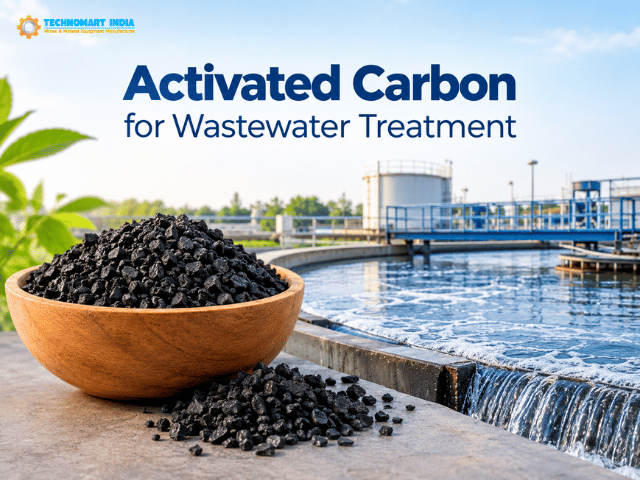
Activated Carbon for Wastewater Treatment
Activated Carbon for Wastewater Treatment is an effective solution for removing organic contaminants, unwanted chemicals, colour, odour, and other impurities from industrial wastewater. As industries increasingly focus on environmental responsibility and sustainable water management, activated carbon has become an important material in modern wastewater treatment systems. Technomart India provides industrial process solutions and plant manufacturing expertise to support businesses seeking efficient and reliable treatment technologies.
Introduction to Activated Carbon for Wastewater Treatment
Wastewater generated by manufacturing facilities, chemical industries, pharmaceutical companies, textile units, food processing plants, and other industrial operations may contain a variety of pollutants. If this wastewater is discharged without appropriate treatment, it can negatively affect water quality, aquatic ecosystems, and public health.
Activated carbon is a highly porous carbonaceous material with a large internal surface area. Its unique structure allows it to adsorb many dissolved organic compounds and other contaminants from water. This makes Activated Carbon for Wastewater Treatment a valuable option for improving effluent quality and supporting industrial water reuse.
Technomart India understands the importance of efficient industrial processing and treatment infrastructure. By helping industries explore suitable plant technologies and process solutions, Technomart India supports businesses working towards improved operational efficiency and environmental compliance.
What Is Activated Carbon?
Activated carbon is a specially processed carbon-rich material designed to develop an extensive network of microscopic pores. It is commonly produced from carbon-containing raw materials such as coal, coconut shells, wood, and other suitable biomass sources.
The activation process develops the pore structure and increases the material’s accessible surface area. Depending on the raw material, manufacturing method, and intended application, activated carbon can be engineered with different pore sizes and adsorption characteristics.
Activated carbon is widely used in:
- Industrial water purification
- Wastewater treatment
- Air and gas purification
- Food and beverage processing
- Chemical manufacturing
- Pharmaceutical applications
- Removal of unwanted colour and odour
In wastewater treatment, its primary function is adsorption. Contaminants attach to the surface of the carbon rather than being removed through ordinary filtration alone.
Why Is Activated Carbon for Wastewater Treatment Important?
Industrial wastewater can contain dissolved organic substances, residual chemicals, colour-causing compounds, and trace pollutants that may not be adequately removed by conventional treatment processes alone.
Activated Carbon for Wastewater Treatment can provide an additional purification stage to help address these challenges.
1. Removal of Organic Contaminants
Many industrial effluents contain organic compounds originating from dyes, solvents, oils, processing chemicals, and production residues. Selected activated carbons can adsorb numerous organic substances, reducing their concentration in treated water.
The effectiveness depends on the specific contaminants, their concentration, water chemistry, and carbon properties.
2. Reduction of Colour
Textile, dyeing, printing, and chemical industries may generate wastewater with visible colour. Activated carbon can adsorb many colour-causing organic molecules, helping improve the appearance of treated effluent.
3. Odour Control
Certain dissolved organic compounds can cause unpleasant odours in wastewater. Activated carbon may help reduce these odours by adsorbing the responsible substances.
4. Support for Water Reuse
Industries looking to reuse treated water can incorporate activated carbon into a multi-stage treatment system. It may help improve water quality before subsequent treatment, depending on the intended reuse application.
5. Improved Final Effluent Quality
When appropriately selected and operated, activated carbon can reduce residual contaminants that remain after biological or physicochemical treatment. It is particularly useful as a polishing stage.
How Activated Carbon for Wastewater Treatment Works
The effectiveness of activated carbon comes primarily from adsorption, a process in which molecules accumulate on the surface of a solid material.
Activated carbon contains an extensive network of pores that provide numerous adsorption sites. When wastewater comes into contact with the carbon, suitable contaminants move from the water to these sites.
The process generally involves the following stages.
Step 1: Wastewater Pretreatment
Wastewater may first pass through screening, settling, oil separation, biological treatment, or other processes. Pretreatment reduces suspended solids and substances that could interfere with carbon performance.
Step 2: Contact with Activated Carbon
The pretreated wastewater enters a vessel, filter, or contact tank containing activated carbon. The configuration depends on the flow rate, contaminant profile, and treatment objectives.
Step 3: Adsorption of Contaminants
As water passes through or mixes with the carbon, suitable dissolved pollutants attach to available adsorption sites. Contact time and carbon characteristics influence the removal efficiency.
Step 4: Treated Water Collection
The treated water is collected and assessed against the required quality parameters. Additional treatment may be necessary before discharge or reuse.
Step 5: Carbon Replacement or Regeneration
Once adsorption capacity becomes insufficient, the carbon must be replaced or regenerated using an appropriate method. Spent carbon must be handled and disposed of or regenerated in accordance with its contaminant loading and applicable regulations.
Types of Activated Carbon Used in Wastewater Treatment
Different activated carbon products are available for wastewater applications. The correct choice depends on the pollutants, operating conditions, and required treatment performance.
Powdered Activated Carbon (PAC)
Powdered activated carbon consists of fine particles that can be added directly to wastewater or incorporated into a treatment process.
Its advantages include:
- Rapid contact with wastewater under suitable conditions
- Flexible dosing according to treatment requirements
- Potential use during temporary increases in pollutant loads
- Compatibility with certain existing treatment systems
PAC is commonly separated from treated water through sedimentation, filtration, or another appropriate solids-removal method.
Granular Activated Carbon (GAC)
Granular activated carbon contains larger particles and is commonly used in fixed-bed filters or adsorption vessels.
Its key advantages include:
- Continuous treatment in appropriately designed systems
- Suitability for polishing treated industrial effluent
- Convenient integration into filtration arrangements
- Potential for regeneration and reuse, depending on the carbon and contaminants
GAC systems require monitoring to determine when the carbon bed is approaching breakthrough, which occurs when contaminants begin passing through at unacceptable concentrations.
Extruded or Pelletized Activated Carbon
Pelletized activated carbon is manufactured in shaped particles, often cylindrical. It is frequently selected for gas-phase applications, but particular grades may also be suitable for specific liquid-treatment processes.
Its suitability for wastewater depends on the manufacturer’s specifications, mechanical properties, pressure-drop requirements, and adsorption performance.
Industrial Applications of Activated Carbon for Wastewater Treatment
Activated Carbon for Wastewater Treatment can be used across multiple industries, although each application requires a treatment design based on the wastewater characteristics.
Textile and Dyeing Industry
Textile wastewater may contain dyes, finishing chemicals, surfactants, and other organic substances. Activated carbon can help reduce selected dissolved colour compounds after suitable pretreatment.
Pharmaceutical Industry
Pharmaceutical manufacturing wastewater can contain organic chemicals, solvents, and residual active compounds. Activated carbon may help remove certain substances as part of a carefully designed treatment train.
Because pharmaceutical contaminants vary considerably, laboratory testing is important before selecting a carbon grade.
Chemical Manufacturing
Chemical plants may produce effluent containing a wide range of organic compounds. Activated carbon can be used to target adsorbable pollutants and improve the quality of treated wastewater.
Food and Beverage Industry
Wastewater from food processing may contain dissolved organic matter, colour, and odour-causing substances. Activated carbon can provide additional treatment following appropriate solids removal and biological treatment.
Pulp and Paper Industry
Paper manufacturing can generate wastewater containing colour-causing compounds and organic residues. Activated carbon may help reduce certain residual pollutants during final effluent polishing.
Municipal Wastewater Treatment
Municipal treatment facilities may use activated carbon to address selected organic micropollutants, odour-causing compounds, and other contaminants that require additional treatment beyond conventional processes.
Benefits of Activated Carbon for Wastewater Treatment
Industries can obtain several benefits by incorporating activated carbon into a properly engineered treatment system.
1. High adsorption potential: Its porous structure provides a large surface area for capturing many suitable contaminants.
2. Flexible treatment configurations: Activated carbon can be implemented in batch processes, contact tanks, or fixed-bed vessels.
3. Improved water quality: It can reduce selected dissolved organic compounds, colour, and odour.
4. Compatibility with other technologies: It can complement biological treatment, membrane filtration, and other purification processes.
5. Support for environmental objectives: By improving effluent quality, it can contribute to industrial pollution-control and water-reuse strategies.
6. Customizable system design: Carbon type, quantity, contact time, and equipment can be selected according to site-specific requirements.
It is important to note that activated carbon does not remove every pollutant equally. Dissolved salts, many inorganic ions, and certain small or highly polar compounds may require alternative or additional technologies.
Activated Carbon Plant Manufacturing and Processing
Reliable activated carbon production requires suitable raw materials, carefully controlled processing conditions, and appropriate plant equipment. Manufacturers must consider the intended application when selecting the raw material and activation method.
Activated carbon manufacturing commonly involves several stages.
Raw Material Selection
Raw materials may include coconut shells, coal, wood, or other suitable carbon-rich feedstocks. Their composition, availability, moisture content, and physical properties influence the manufacturing process.
Carbonization
The selected raw material is heated under controlled conditions with limited oxygen. This converts it into a carbon-rich material while removing volatile components.
Activation
The carbonized material undergoes physical or chemical activation to develop its pore structure.
Physical activation commonly uses steam or carbon dioxide at elevated temperatures. Chemical activation uses suitable activating agents followed by required processing and washing steps.
Cooling and Processing
After activation, the material is cooled and may undergo crushing, screening, washing, drying, or other finishing operations according to the product specification.
Quality Testing
The finished carbon can be evaluated for properties such as moisture, ash content, particle size, hardness, surface area, and adsorption performance. The relevant testing parameters depend on the intended application.
Technomart India works in industrial plant manufacturing and process solutions, including activated carbon plant-related requirements. Businesses planning a new plant or upgrading an existing production facility should assess feedstock availability, process capacity, utilities, emission controls, and product quality requirements before finalizing the plant configuration.
Factors to Consider When Selecting an Activated Carbon System
Selecting an appropriate treatment system requires a detailed understanding of the wastewater and the required outcome.
Wastewater Composition
Identify the target contaminants, their concentrations, pH, suspended solids, and the presence of oils or competing organic compounds.
Treatment Capacity
The plant design should account for average and peak wastewater flow rates, operating schedules, and future production expansion.
Carbon Type and Quality
Powdered and granular activated carbon have different operating characteristics. The carbon grade should be selected based on adsorption performance and compatibility with the application.
Contact Time and Bed Design
For fixed-bed systems, bed depth, flow distribution, empty-bed contact time, and hydraulic loading affect treatment performance. These parameters should be established through engineering calculations and appropriate testing.
Regeneration and Disposal
Spent carbon management is an important operating consideration. Regeneration may reduce material consumption in suitable applications, but its feasibility depends on the contaminants and carbon properties.
Regulatory Requirements
The treatment process should be designed to meet applicable discharge or reuse requirements. Sampling and laboratory analysis are necessary to confirm performance.
Activated Carbon for Wastewater Treatment Compared with Other Technologies
Activated carbon is often most effective when used alongside other treatment technologies rather than as a complete replacement for them.
Biological treatment: Uses microorganisms to break down biodegradable organic matter. Activated carbon may remove selected residual organic compounds that remain afterward.
Membrane filtration: Uses membranes to separate contaminants according to membrane characteristics and operating conditions. Activated carbon may be used upstream or downstream for specific adsorption needs.
Chemical treatment: Uses reactions such as coagulation, precipitation, or oxidation to transform or remove pollutants. Activated carbon can complement these processes by adsorbing suitable residual compounds.
Sand filtration: Primarily removes suspended particles. Activated carbon provides adsorption capabilities that ordinary sand filtration does not offer to the same extent.
An integrated treatment train should be selected according to the wastewater characteristics, target discharge limits, operational budget, and water-reuse objectives.
Cost Considerations for Activated Carbon Treatment Systems
The cost of an activated carbon system depends on several factors, including plant capacity, carbon grade, equipment configuration, wastewater composition, and required treatment performance.
Major cost components may include:
- Activated carbon purchase and replacement
- Adsorption vessels, tanks, and filtration equipment
- Pumps, piping, valves, and instrumentation
- Pretreatment and post-treatment equipment
- Labour, energy, and maintenance
- Carbon regeneration or spent-carbon disposal
- Water testing and performance monitoring
A lower initial purchase price does not necessarily mean a lower overall operating cost. Carbon consumption, replacement frequency, pressure drop, and contaminant loading can significantly affect long-term expenses.
Pilot testing can help determine the approximate carbon requirement and estimate operating costs before investing in a full-scale system.
Why Choose Technomart India for Activated Carbon Plant?
Technomart India is an industrial plant and equipment solutions provider with experience in plant manufacturing and turnkey project requirements. Established in 1992, the company serves industrial customers across different markets and supports projects involving process planning, engineering, manufacturing, installation, and commissioning.
For businesses exploring activated carbon production or related industrial plant requirements, Technomart India can be approached to discuss project needs and suitable process configurations.
When planning an activated carbon-related project, customers should clearly define their objectives, such as manufacturing activated carbon, treating industrial wastewater, or integrating an adsorption stage into an existing treatment plant. These are distinct requirements and may involve different equipment and engineering approaches.
The right solution should be based on technical feasibility, raw material availability, production capacity, wastewater characteristics, and applicable environmental standards.
Future of Activated Carbon in Wastewater Treatment
Growing demand for water conservation and industrial wastewater reuse is encouraging businesses to consider advanced treatment technologies. Activated carbon is expected to remain relevant because of its versatility and ability to adsorb a wide range of organic contaminants.
Research and development continue to explore alternative raw materials, improved activation methods, more efficient regeneration, and specialized carbon products for emerging pollutants.
Industries are also increasingly evaluating treatment systems through a lifecycle-cost perspective. This includes carbon consumption, energy use, waste management, and the potential value of recovering water for reuse.
In this changing environment, Activated Carbon for Wastewater Treatment can contribute to more efficient industrial water management when supported by appropriate design, monitoring, and maintenance.
Frequently Asked Questions (FAQs)
1. What is activated carbon used for in wastewater treatment?
Activated carbon is used to adsorb selected dissolved organic contaminants, colour-causing substances, and odour-causing compounds from wastewater. It is often used as a polishing stage after primary or biological treatment.
2. Which type of activated carbon is best for wastewater treatment?
Powdered activated carbon and granular activated carbon are common choices. The best option depends on wastewater composition, treatment capacity, operating conditions, and the required effluent quality.
3. Can activated carbon remove colour from industrial wastewater?
Yes. Activated carbon can reduce many dissolved colour-causing organic compounds, particularly in suitable textile, dyeing, and chemical wastewater applications. Performance depends on the specific compounds and treatment conditions.
4. Does activated carbon remove all pollutants from wastewater?
No. Activated carbon is effective against many adsorbable substances but does not reliably remove all dissolved salts, inorganic contaminants, suspended solids, or every organic compound. Additional treatment may be required.
5. How often should activated carbon be replaced?
Replacement frequency depends on contaminant loading, carbon capacity, wastewater flow, and operating conditions. Monitoring influent and effluent quality helps determine when replacement or regeneration is necessary.
6. Can activated carbon be regenerated?
Yes. Certain activated carbons can be regenerated, commonly through thermal or other suitable processes. Feasibility depends on the carbon grade, adsorbed contaminants, and the availability of appropriate regeneration facilities.
7. Is activated carbon suitable for industrial wastewater reuse?
It can form part of a water-reuse treatment system by reducing selected contaminants. Additional processes and testing may be necessary to meet the quality requirements of the intended reuse application.
8. What industries use activated carbon for wastewater treatment?
Textile, pharmaceutical, chemical, food processing, pulp and paper, and municipal wastewater facilities are among the potential users. The suitability of activated carbon must be evaluated for each application.
9. What is the difference between an activated carbon plant and a wastewater treatment plant?
An activated carbon plant manufactures activated carbon from suitable raw materials. A wastewater treatment plant treats contaminated water. Although activated carbon produced in one plant may be used in the other type of facility, their equipment and process requirements are different.
10. How can Technomart India help with activated carbon plant requirements?
Technomart India can be contacted to discuss industrial plant manufacturing and project requirements related to activated carbon production. The proposed configuration depends on production capacity, raw materials, process requirements, and project objectives.
Conclusion
Activated Carbon for Wastewater Treatment offers an effective adsorption-based approach for reducing selected organic contaminants, colour, and odour in industrial effluent. When integrated with suitable pretreatment and complementary purification technologies, it can help improve treated water quality and support responsible water management.
Successful implementation depends on selecting the right carbon, understanding the wastewater characteristics, designing the equipment appropriately, and monitoring system performance throughout operation.
For businesses considering activated carbon manufacturing or related industrial plant projects, Technomart India can be contacted to discuss project requirements and potential process solutions. A well-planned approach helps industries make informed investment decisions while working towards operational efficiency and environmental responsibility.
To learn more about the Activated Carbon Plant, explore our related blogs:
- How an Activated Carbon Plant Works: Read More
- Coconut Shell vs Coal-Based Activated Carbon: Which Is Better?: Read More
- Powerful Benefits of Activated Carbon in Gold Recovery: Read More
- Guide For Activated Carbon Plant Manufacturing & Setup: Read More
- Best Activated Carbon Manufacturer in India: Read More